Living in Wakefield, MA: A Local Realtor’s Guide to the Town on the Lake
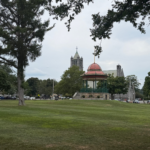
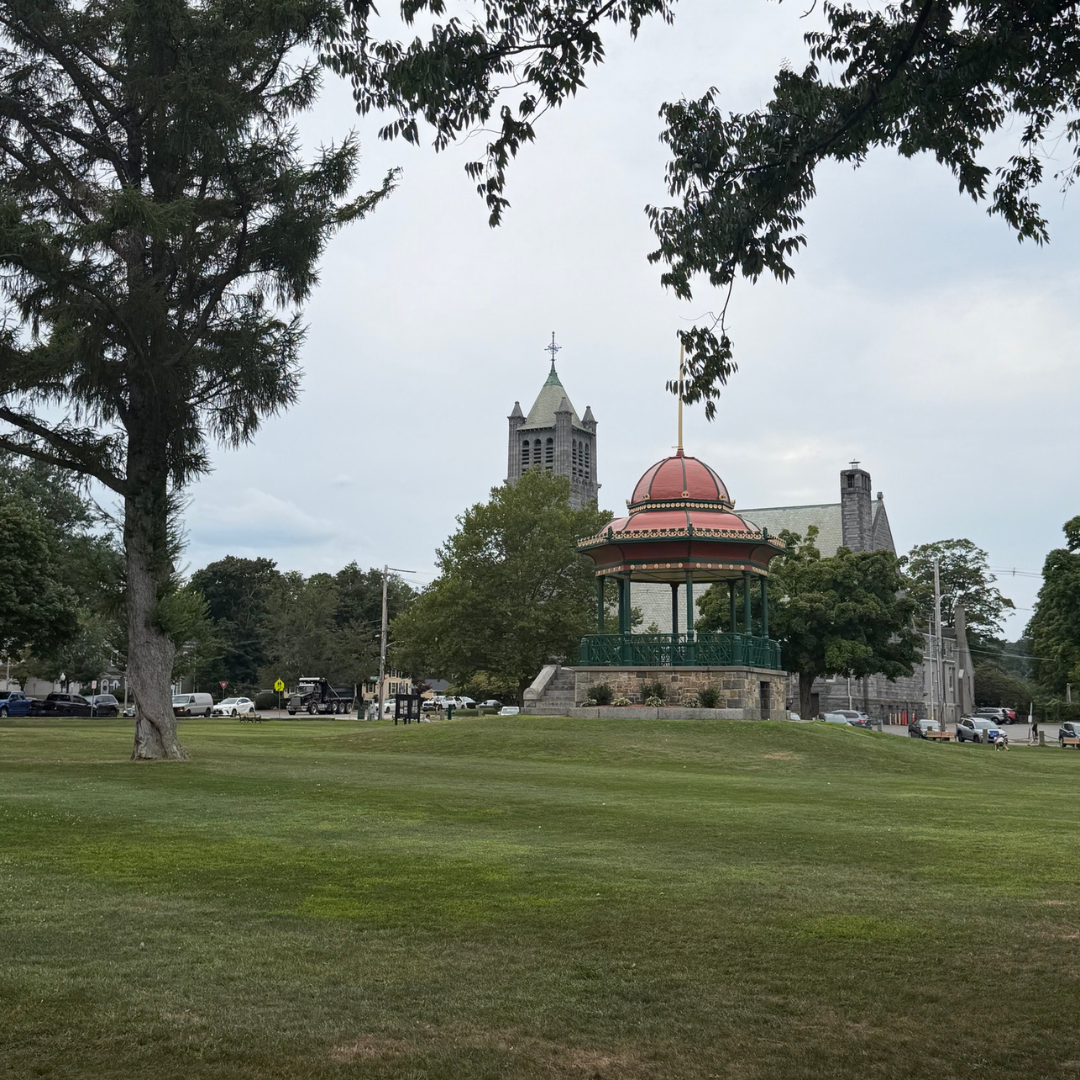
You come around the bend on North Avenue, the lake opens up on your left with the bandstand and the church steeple behind it. Beautiful.
I’m Jodi Crowley, a trusted residential real estate advisor based in Woburn, and I’ve spent years helping buyers figure out which town North of Boston is actually theirs.
This is the guide I wanted to create for my clients when they ask me what living in Wakefield, MA is really like: the commute, the taxes, the schools, the lake, and the parts nobody puts in a listing.
Table of Contents
Wakefield, MA at a Glance
Population | About 27,800 |
Distance to Boston | ~12 miles; roughly 25–35 minutes by car, ~25 minutes by train |
County | Middlesex |
Incorporated | 1644 as Reading; renamed Wakefield in 1868 |
Zip code | 01880 |
FY2026 residential tax rate | $11.74 per $1,000 |
Median household income | About $134,300 |
Lakes | Two — Lake Quannapowitt and Crystal Lake |
Commuter rail stations | Two — Wakefield and Greenwood, both on the Haverhill Line |
Public schools | 4 elementary, 1 middle, 1 high school (~3,379 students) |
Is Wakefield, MA a Good Place to Live?
Short answer: yes – if you want a real downtown, a lake you’ll actually use, and a town that still does a Fourth of July parade the way towns used to.
What people love. Wakefield has something most suburbs gave up decades ago: a center. Main Street has restaurants people drive in for, a 1923 library that looks like a monument, and a common with a bandstand where the town band still plays free concerts on summer Friday nights. Lake Quannapowitt is a genuine daily amenity – a walkable loop about three miles around.
What to weigh. Housing stock skews older, with a lot of early-1900s and mid-century homes, which means charm and also means you should budget for systems.
Who it’s right for. In my experience, Wakefield lands hardest with four kinds of buyers:
- Families trading up from a condo in Somerville, Medford, or Malden, who want a yard and a walkable downtown and aren’t willing to give up either.
- Longtime North Shore residents who want to stay near family but want a shorter commute than Peabody or Danvers.
- Remote and hybrid workers who care more about a good coffee shop and a lake loop than a train schedule.
- Empty nesters who don’t want to leave — Wakefield has a strong “we’re staying” contingent, which is part of why inventory is tight.
Where Is Wakefield, MA? Location and Getting Around
Wakefield sits about 12 miles north of downtown Boston in Middlesex County, tucked into the corner where I-95/Route 128 meets Route 1 and I-93 is a short hop west. It borders Reading to the north, Lynnfield to the northeast and east, Saugus to the southeast, Melrose to the south, and Stoneham to the west – which in practice means you’re 10 minutes from Market Street Lynnfield, 10 minutes from Jordan’s in Reading, and about 20 minutes from the beach at Nahant on a good day.
Commuting to Boston from Wakefield
Commuter rail – and you get two stations. Wakefield is on the MBTA Haverhill Line with two stops inside town limits: Wakefield station (225 North Ave, near downtown) and Greenwood station in the southern part of town. Both are Zone 2. The ride into North Station runs about 25 minutes.
By car. I-95/Route 128 runs along the town’s northern edge, Route 1 is minutes east, and I-93 is a straight shot west through Stoneham. Expect 25–35 minutes to downtown Boston off-peak and 45–60 at rush hour. Logan is about 30 minutes via Route 1 and the tunnel.
Bus. MBTA bus service connects Wakefield toward Malden Center and the Orange Line. Bus 137
Walkability. Downtown Wakefield is genuinely walkable, which is rarer north of Boston than people assume. If you live in the Center or Lakeside, you can walk to the train, the library, dinner, and the farmers market. Greenwood and Montrose are more car-dependent.
Wakefield’s Neighborhoods
Downtown / Wakefield Center
The heart of town around Main Street, the Common, Beebe Library and Lake Quannapowitt. The Wakefield commuter rail station, shops and restaurants are close by, making this one of Wakefield’s most walkable areas.
Lakeside
North-central Wakefield along the eastern side of Lake Quannapowitt and toward the Reading line. Lake access, recreation and proximity to the loop are defining features.
Greenwood
Southern Wakefield, bordering Melrose and Stoneham, with its own commuter rail stop, neighborhood commercial area and especially strong local identity. The housing stock includes many smaller homes and bungalows mixed with wooded streets and open space.
West Side
Primarily west of Lake Quannapowitt and Crystal Lake, with tree-lined streets, historic homes and a well-established neighborhood identity. The West Side Social Club is also behind Wakefield’s beloved July Fourth morning activities, concert and fireworks.
East Side
Near the geographic center of Wakefield, east of downtown and around Crystal Lake. It is primarily residential and sits between Downtown, Greenwood and Woodville.
Woodville
Central-eastern Wakefield, around Woodville Elementary and extending toward Breakheart Reservation. Predominantly residential, with neighborhood streets and access to significant open space.
Montrose
Northeastern Wakefield near the Lynnfield line. Its hills, winding roads and more suburban setting distinguish it from the denser areas around downtown, with convenient access toward I-95/Route 128 and Lynnfield.
Thinking About Moving to Wakefield, MA? The Housing Market
What a Home in Wakefield Actually Costs
Here’s what three decades of Wakefield sales data says about buying in this town — the kind of thing that stays true from one year to the next.
The number, and the house behind it
A single-family home in Wakefield sells for somewhere in the mid-$800,000s these days. What that buys is remarkably consistent: three bedrooms, two baths, about 1,860 square feet, on a quarter-acre lot, built around 1950.
Wakefield, MA is a town with an older, well-established housing inventory. Roughly seven in ten homes that sell here were built before 1960. Half are Colonials. One in five is a Cape, one in seven a Ranch. If you’re picturing new construction on a big lot, that’s not what’s on the market — fewer than one in fifteen sales is a home built this century.
What each tier gets you
The jump between price bands is mostly a jump in square footage and bathrooms:
- Under $700,000 — about one in five sales. Expect around 1,400 square feet and, often, a single bathroom.
- $700,000–$850,000 — the heart of the market. Roughly 1,780 square feet, two baths.
- $850,000–$1 million — about 2,000 square feet, usually updated.
- Over $1 million — four bedrooms, three-plus baths, 2,600 square feet and up. About one in four Wakefield sales now lands here, which would have been unthinkable a decade ago.
Neighborhood matters less than you’d think
The spread between Wakefield’s named neighborhoods is real but modest. The West Side and Montrose tend to run above the town median; Greenwood — the busiest neighborhood by sales volume — tends to run a little below it, which makes it the reliable entry point. Lakeside sits in between. The gap between the priciest and most affordable pockets is meaningful, but it isn’t the chasm you’ll find in some neighboring towns.
Why the price holds
Here’s the part that doesn’t show up in a monthly market report. When the housing market crashed nationally, Wakefield’s median price fell about 12% from its 2005 peak — and was fully recovered by 2014. This is a small, tightly held market: only about 200 single-family homes change hands here in a typical year, roughly four a week. That scarcity cuts both ways. It makes finding the right house hard, and it makes the value of the one you buy unusually durable.
Figures drawn from MLS records for Wakefield single-family sales, 1993–2026. Price points move with the market; the patterns above have held for years.
What you actually get. Wakefield’s housing stock runs from early-1900s Colonials and Victorians near the Center, to 1940s–60s Capes and ranches in Greenwood and the West Side, to larger and newer homes in Montrose. There’s a modest condo market downtown and near the train, which is where a lot of first-time buyers and downsizers land.
Property Taxes in Wakefield, MA
Wakefield’s FY2026 residential tax rate is $11.74 per $1,000 of assessed value. The commercial/industrial/personal property rate is $22.40.
Here’s what that means in practice:
Assessed value | Approximate annual tax |
|---|---|
$600,000 | $7,044 |
$750,000 | $8,805 |
$850,000 | $9,979 |
$1,000,000 | $11,740 |
That puts Wakefield in the middle of the pack for Middlesex County — higher than Woburn’s $9.15, lower than plenty of its neighbors. Remember that your bill is driven by the assessment, not just the rate, and assessments get updated annually.
Wakefield Public Schools
Wakefield Public Schools serves about 3,379 students across six schools, and the district is in the middle of the biggest capital project in recent town history.
Elementary schools (4):
- Dolbeare Elementary
- Greenwood Elementary
- Walton Elementary
- Woodville Elementary
Middle school: Galvin Middle School (grades 6–8), a relatively recent building on Main Street near the Common.
High school: Wakefield Memorial High School — the Warriors.
The new high school
This is the thing buyers should know and most guides don’t mention. Wakefield is building a brand-new Wakefield Memorial High School, backed by a $63 million grant from the Massachusetts School Building Authority. Construction has been running since March 2024, and the new building is expected to open in early 2027. The old 1960 building had failing envelope, ventilation, and electrical systems; the replacement is designed to beat Massachusetts energy code by 20%.
For a buyer, that’s a real signal — a town investing in itself, and an amenity coming online right as you’d be moving in. It also means a tax and debt-service picture worth understanding before you buy.Wakefield voters approved a Proposition 2½ debt exclusion in 2023 to fund the town’s share of the new high school, which means homeowners will see the project’s debt service reflected in their property taxes for the life of the borrowing. The impact varies by a home’s assessed value and is expected to increase as the project is fully bonded, so buyers should factor that future cost into their housing budget.
Wakefield’s FY2026 materials show $5.17 million of the town’s FY2026 tax levy attributable to the high-school debt exclusion. Wakefield’s total debt exclusions, including the older Galvin Middle School debt, are expected to cost the average single-family homeowner about $701 in FY2026.
Also available: Northeast Metropolitan Regional Vocational High School serves Wakefield students, and the district runs the P.O.S.T. Academy for post-secondary transition.
Lake Quannapowitt and the Outdoors
Lake Quannapowitt covers about 254 acres, with a popular paved loop approximately 3.6 miles around. On any decent evening it’s full of walkers, strollers, runners, and dogs, with more than half the route directly on the water. It hosts 5Ks and charity walks all season. In summer there’s kayaking and paddleboarding, and the Quannapowitt Yacht Club — founded in 1886 and the oldest inland yacht club in the United States — runs sailing on the lake.
Crystal Lake, on the other side of town, is Wakefield’s drinking water supply, so no swimming or boating — but the perimeter is a quieter walk and a good birding spot.
Breakheart Reservation is Wakefield’s back door to real hiking. Over 600 acres of hardwood forest shared with Saugus, with an entrance at 100 Hemlock Road in Wakefield. There’s a trail system with hilltop views toward Boston and New Hampshire, plus Pearce Lake with a supervised swimming beach in season. Parking is free.
Around town: Wakefield’s parks and rec system covers fields, courts, playgrounds, and community gardens across the neighborhoods.
If you like Lake Quannapowitt, you will like Horn Pond. Take a look HERE.
Things to Do in Wakefield, MA: The Annual Calendar
When | Event | What it is |
|---|---|---|
June–October, Saturdays | Wakefield Farmers Market | 35+ vendors downtown; widely considered one of the best around. Typically mid-June through October. |
July & August | Concerts at the Bandstand | Free evening concerts by the Wakefield Summer Band at the Lower Common bandstand overlooking Lake Quannapowitt. The series traditionally consists of several Friday-night concerts |
July & August | Movies by the Lake | Outdoor screenings at the bandstand with pre-show activities for kids |
July 4 | Independence Day Parade | Running since 1922. A two-mile route from Lakeside Office Park down Church and Common to Main Street, stepping off at 5:00 PM, with DCI drum and bugle corps, marching bands, and floats. Morning events and fireworks over Lake Quannapowitt are run by the West Side Social Club. Draws crowds in the tens of thousands. |
Summer | Wakefield Porchfest | Neighborhood porches turn into stages for a day of live music – usually late August |
Year-round | Quannapowitt Players / Americal Civic Center | Community theater and events at 467 Main Street |
Downtown Wakefield: Eat, Drink, Shop
Main Street is the reason people choose Wakefield over the towns on either side of it. A few of the names that come up constantly:
- Bellino’s Trattoria — Italian, a longtime local favorite. Bellino’s Trattoria website
- Sabatino’s Restaurant — Classic Italian in downtown Wakefield. Sabatino’s website
Interesting update: the Sabatino family sold the restaurant in 2026 to longtime employees/family members, but the Sabatino’s name is staying and operations are continuing. - Caffe Italia — Family-run Italian restaurant and bar on Water Street. Caffe Italia website
- Tonno Wakefield — Coastal Italian with an emphasis on seafood and house-made pasta; sister restaurant to Tonno Gloucester. Tonno website
- Blue Moon Grill Wakefield — Popular breakfast, brunch, and lunch spot known for a large breakfast menu. I would remove the “higher-end room” description. It is open daily from 7 a.m.–2 p.m. Blue Moon Grill website
- Billy’s Famous Roast Beef — Longtime North Shore-style roast beef and fried seafood spot, operating in Wakefield since 1989. Billy’s Famous Roast Beef website
- North Ave Diner — Classic diner near the commuter rail with all-day breakfast and an extensive comfort-food menu; serving Wakefield since 2000. North Ave Diner website
- Early Harvest Diner — Breakfast and lunch diner known for classic breakfast dishes and creative specials. Early Harvest Diner website
- Harrington’s Food & Spirits — Family-owned Irish-style neighborhood pub on Water Street, serving Wakefield since 2004. Harrington’s Food & Spirits
- Main ST Grille & Taphouse — Neighborhood grille and taphouse serving American fare, BBQ, seafood, craft beer, and cocktails. It is in Greenwood, not downtown Wakefield, so I would change that description. Main ST Grille & Taphouse website
Nearby: Market Street Lynnfield (10 minutes) for upscale shopping and dining; Jordan’s Furniture in Reading for the IMAX theater and BeanStalk ropes course; Kings Dining & Entertainment for bowling and arcade.
Arts, History, and Civic Life
Lucius Beebe Memorial Library was dedicated in 1923 and remains one of the most beautiful public buildings north of Boston. Designed by noted architect Ralph Adams Cram in the Classical Revival style, the building was made possible in part by a $60,000 gift from Junius Beebe, son of Lucius Beebe. Its historic reading room is ringed by 14 medallions depicting literary figures including Homer, Cicero, Shakespeare and Emerson. The library continues to host book clubs, story times and community programs throughout the year.
The Common District is Wakefield’s historic civic center, centered on the Common and including Town Hall, Beebe Library, the post office and the 1885 bandstand. Many of its defining civic landmarks date from the late 19th through the early 20th century, giving this part of Wakefield its particularly handsome, historic character. The district was added to the National Register of Historic Places in 1990.
Col. James Hartshorne House dates to 1681 and is considered Wakefield’s oldest surviving structure. Sitting along the shore of Lake Quannapowitt, the historic house and grounds are available for private events.
Wakefield History Museum occupies the 1847 West Ward School at 39 Prospect Street, a Greek Revival schoolhouse now maintained by the Wakefield Historical Society. The restored building became the town’s history museum in 2010 and houses artifacts, photographs and exhibits documenting Wakefield’s past.
The Wakefield Rattan Works. Wakefield’s name is closely tied to industrialist Cyrus Wakefield, who moved his growing rattan manufacturing operation from Boston to what was then South Reading in 1855. The Wakefield Rattan Company became the town’s leading industry and eventually one of the world’s largest manufacturers of rattan goods, producing furniture, baskets, matting and other products. In the late 1860s, Cyrus Wakefield offered land and substantial funding for a new Town Hall. The town subsequently voted to change its name from South Reading to Wakefield in his honor. The original factory complex no longer survives, but the rattan industry remains one of the most important chapters in Wakefield’s history.
Local Organizations and How to Plug In
One of the fastest ways to feel like you live somewhere is to join something. Wakefield has a particularly active network of civic, cultural, business and recreational organizations, with plenty of ways to volunteer, participate or simply meet people.
Wakefield Area Chamber of Commerce
The Chamber serves businesses in Wakefield, Lynnfield and surrounding communities through networking, advocacy, educational programs and community events. Membership is open to businesses and nonprofit organizations.
Website: Wakefield Area Chamber of Commerce
Email: [email protected]
Phone: 781-245-0741
Office: 467 Main Street, WakefieldWakefield Independence Day Committee
This volunteer nonprofit organizes Wakefield’s Fourth of July parade, a community tradition dating to 1922. The present Wakefield Independence Day Committee was formed in 1991, so I would not say that the committee itself has existed since 1922. Volunteers are needed both before and during parade day.
Website: Wakefield Independence Day Parade
Email: [email protected]
Phone: 339-927-1946
Mail: P.O. Box 1746, Wakefield, MA 01880West Side Social Club
Founded in 1936, the West Side Social Club has a long history of community involvement in Wakefield. Its Fourth of July Committee organizes the morning children’s activities, concert and fireworks on the Common. The club has more than 500 members and welcomes inquiries about membership.
Website: West Side Social Club
Phone: 781-245-9759
Address: 4 Harrington Court, WakefieldWakefield Center Neighborhood Association
The WCNA is a nonprofit dedicated to beautification and improvements in Wakefield Center and its adjacent parks. Its projects and events have included improvements to the Common, playground projects, the holiday Lighting of the Lights and the popular Festival by the Lake. Membership is open to anyone interested in supporting Wakefield’s center and parks.
Website: Wakefield Center Neighborhood Association
Email: [email protected]
Phone: 781-246-9262
Mail: P.O. Box 485, Wakefield, MA 01880Albion Cultural Exchange
Located at 9 Albion Street, the Albion Cultural Exchange supports local art, music and community programming, including live performances, art education and gallery events. One important distinction is that ACE is a Town-owned cultural space managed by the Wakefield Recreation Department, rather than a separate membership organization.
Website: Albion Cultural Exchange
Contact: Wakefield Recreation Director Dan McGrath
Email: [email protected]
Phone: 781-246-6389
Address: 9 Albion Street, WakefieldWakefield Farmers Market
The market is one of Wakefield’s most visible community gathering places, bringing local farms, food producers, artisans, musicians and nonprofit groups together at Hall Park. Volunteers can help with market setup and breakdown, SNAP assistance and other market-day needs. The market also offers opportunities for local nonprofits, sponsors and board volunteers.
Website: Wakefield Farmers Market
Email: [email protected]
Phone: 339-231-5480
Location: Hall Park, 468 North Avenue, WakefieldBoys & Girls Club of Metro North, Wakefield
The organization formerly known locally as the Boys & Girls Clubs of Stoneham & Wakefield is now Boys & Girls Club of Metro North. Its Wakefield Teen Center is located at the Americal Civic Center, and the organization also operates Camp Wakefield, Community Boating on Lake Quannapowitt and other youth programs. Volunteer opportunities are available throughout the organization.
Website: Boys & Girls Club of Metro North
Email: [email protected]
Wakefield Teen Center: 781-246-1343
Address: 467 Main Street, WakefieldQuannapowitt Yacht Club
Located directly on Lake Quannapowitt, QYC is a small-boat sailing club with membership opportunities for experienced sailors as well as people who want to learn. It offers adult learn-to-sail programs, youth sailing, racing and social activities. The club actively welcomed prospective members during its 2026 season.
Website: Quannapowitt Yacht Club
Phone: 781-281-9772
Address: 26 Linda Road, Wakefield
Membership inquiries can be submitted directly through the club’s website.
Wakefield vs. Its Neighbors: Which Town Is Yours?
Buyers rarely shop one town. Here’s how I frame the choice.
The feel | Best for | |
|---|---|---|
Wakefield | A real downtown wrapped around a lake. Civic, traditional, social. | Buyers who want walkability and community without paying Winchester prices |
Reading | Larger, more suburban, strong schools reputation, busier center | Families prioritizing school reputation and newer housing stock |
Melrose | Denser, more urban, closest to Boston, very walkable | Buyers coming out of the city who don’t want to give up sidewalks |
Stoneham | Value play, Spot Pond and the Fells, quieter center | Budget-conscious buyers who want green space |
Lynnfield | Larger lots, higher price point, Market Street | Buyers who want space and shopping, less interested in downtown life |
Frequently Asked Questions About Living in Wakefield, MA
Is Wakefield, MA a good place to live? Yes, for most buyers. It offers a walkable downtown, two commuter rail stations, two lakes, a well-regarded school district building a brand-new high school, and an unusually active community calendar – about 12 miles from Boston. The trade-offs are a competitive housing market, an older housing stock, and commuter rail rather than subway access.
How far is Wakefield, MA from Boston? About 12 miles. Roughly 25–35 minutes by car off-peak, 45–60 minutes at rush hour, and about 25 minutes on the MBTA Haverhill Line commuter rail into North Station.
What is the property tax rate in Wakefield, MA? The FY2026 residential rate is $11.74 per $1,000 of assessed value. A home assessed at $750,000 would owe roughly $8,805 per year.
How much does a house cost in Wakefield, MA? As of mid-2026, typical home values sit around $835,000 with a median list price near $750,000. Inventory is tight at roughly 1.8 months of supply, and well-priced homes tend to sell at or above asking.
Does Wakefield have a commuter rail station? Two — Wakefield station on North Avenue near downtown, and Greenwood station in the southern part of town. Both are Zone 2 on the Haverhill Line. Neither is currently accessible.
What schools serve Wakefield, MA? Wakefield Public Schools operates four elementary schools (Dolbeare, Greenwood, Walton, Woodville), Galvin Middle School, and Wakefield Memorial High School, serving about 3,379 students. A new high school building, supported by a $63 million MSBA grant, is expected to open in early 2027.
What are the best neighborhoods in Wakefield? Downtown/Wakefield Center and Lakeside for walkability and lake access; Greenwood for its own commuter rail stop and village feel; Montrose for larger lots near Route 128; the West Side and Woodville for family-friendly residential streets.
What is Wakefield, MA known for? Lake Quannapowitt, its Independence Day parade running since 1922, the Lucius Beebe Memorial Library, and its history as the home of Cyrus Wakefield’s rattan works.
Ready to Take a Look at Wakefield?
The best way to know whether Wakefield is your town is to walk the lake on a Saturday morning, get a coffee downtown, and see whether it feels like home. If it does, I’d love to help you find the house.
I’m Jodi Crowley, REALTOR® (MA License #9037552) with Lamacchia Realty, based right down Route 128 in Woburn. I know these towns, I know the agents on the other side of the table, and I know how to get an offer accepted in a market this tight.
📞 339-227-2282 📍 [email protected]