If you own a home in Woburn, Reading, Burlington, Wakefield, Stoneham, Winchester, or another community north of Boston, you have probably wondered whether finishing your basement is worth it.
It seems like a simple question. More usable space should mean a more valuable house. Usually a good finished basement does add value, but the answer is more complicated than counting square feet.
I tour a lot of homes with buyers, and basements are the clearest example I know of the difference between having more finished space and having space buyers actually want. A bright walkout with good ceiling height, dry conditions, a bathroom, and easy access from the main floor feels like a natural extension of the home. A low-ceilinged room with visible moisture, awkward mechanicals, and carpet over a questionable floor is technically “finished” too. Buyers do not read those two spaces the same way.
Here is what I would want you to think about before spending tens of thousands of dollars.
Does a Finished Basement Count as Square Footage?
This is the question I get most, and it is where the biggest misconception lives. If you finish 800 square feet downstairs, you generally should not assume you have added the same value as 800 square feet above grade.
For many mortgage appraisals, above-grade and below-grade finished areas are reported separately. A level can be considered below grade even when only part of it sits below the ground.
That does not mean the basement has no value. A well-designed finished basement can contribute substantially to market value. It means buyers and appraisers analyze it separately from the main living area, which is why multiplying finished basement square footage by your home’s above-grade price per square foot usually produces a misleading number.
What Makes a Basement Valuable to Buyers
When I walk through a basement with buyers, I am looking at much more than drywall and flooring.
Ceiling height. Generous ceiling height can make a lower level feel like the rest of the house. Low ceilings with exposed pipes, ductwork, or beams feel utilitarian no matter how fresh the paint is. That matters especially in older homes north of Boston, where basement configurations vary a lot from street to street.
Light and outdoor access. Larger windows, well-built window wells, French doors, or a true walkout transform the space. A walkout does double duty: it brings in light and improves the flow to the backyard, a real advantage on a sloping lot.
A bathroom. If people are going to use the space as a media room, office, gym, or guest overflow, not having to go upstairs matters. It matters even more to buyers looking at the home as a multigenerational setup, where the lower level often becomes someone’s primary living space. Expect buyers to ask whether the plumbing and electrical work was permitted.
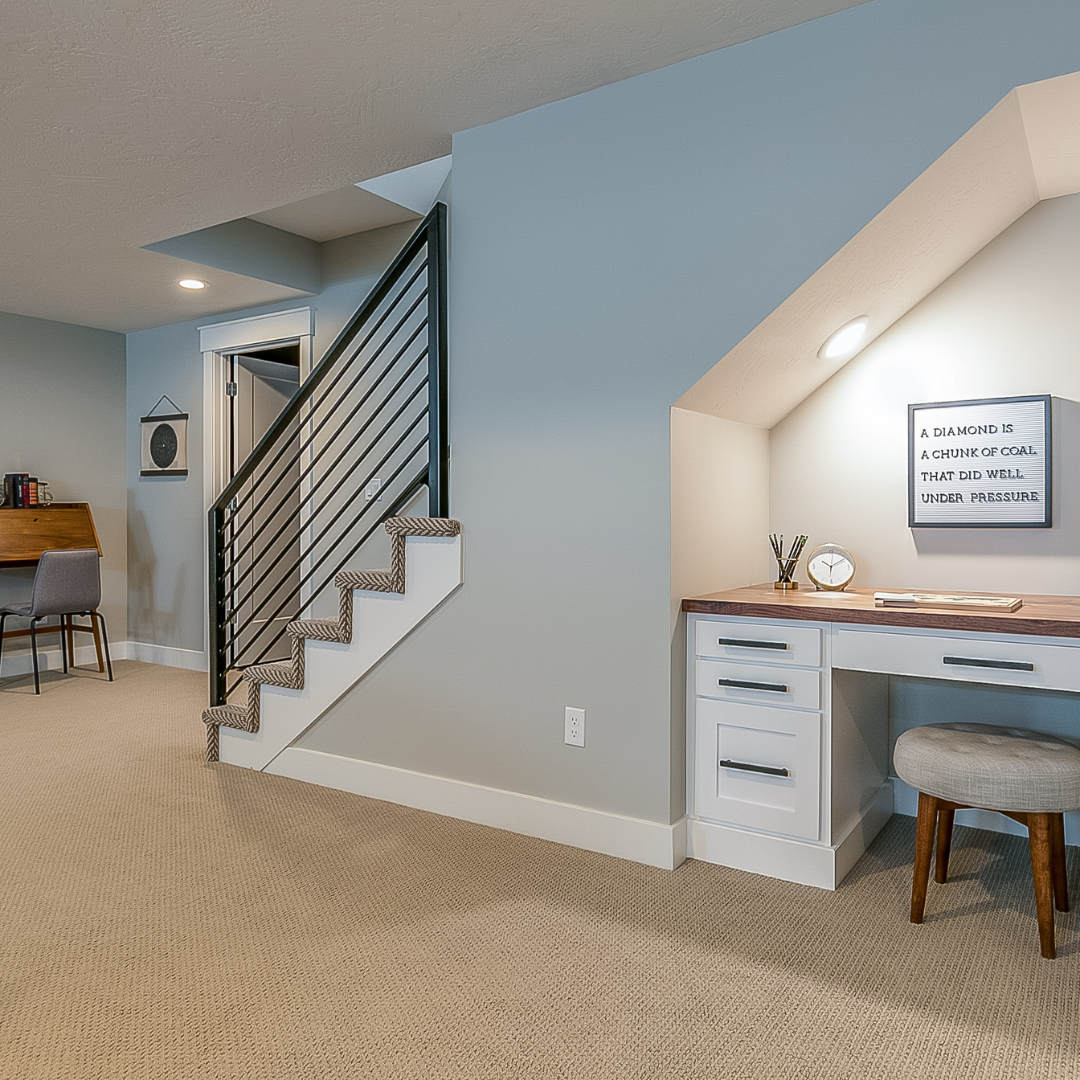
How it connects to the rest of the house. Does the staircase feel like part of the home, or do you open a door, go down a steep flight, and cross an unfinished utility area to reach the finished room? Two basements with identical square footage can feel completely different based on nothing but the approach.
Moisture Is the Thing to Get Right First
Before paint colors, flooring, or built-ins, make sure the basement is dry. Basements sit below grade, so they are naturally more vulnerable, and buyers know to look. What they notice:
- Musty odors
- Efflorescence or staining on foundation walls
- A dehumidifier running continuously
- Water staining, or rust around mechanical equipment
- Freshly painted foundation walls, or new flooring in an otherwise older basement
- Sump pumps, drainage systems, or visible cracking
None of these on its own means there is a serious problem. A dehumidifier is common in New England basements and can simply be responsible moisture management. But when several show up together, buyers start asking questions.
This is also why I would think hard before installing wall-to-wall carpet in a basement you plan to sell. Carpet feels warm, and new carpet is not evidence of a problem by itself. But below-grade humidity is real, and carpet is difficult to deal with if water ever gets in. When I am previewing a home for a buyer, new basement carpet makes me curious about what is underneath, especially alongside an uneven floor. Flooring made for below-grade environments is usually the better choice.
Permits, Bedrooms, and Kitchenettes
“Was the basement finished with permits?” comes up in a lot of transactions, and it matters most when the work involved electrical, plumbing, a bathroom, new walls, heating, or a change in how the space is used. Before starting a renovation, contact your city or town’s building or inspectional services department. Requirements are not identical from one community to the next, so check with yours rather than assuming.
Two things to be careful about:
Calling a basement room a bedroom. Putting a bed in a finished basement room does not make it a legal bedroom. Habitable space can be subject to requirements involving emergency escape and rescue openings, ceiling height, ventilation, and smoke and carbon monoxide detection.
Adding a kitchenette. Creating something that looks like a separate apartment can raise zoning and permitting questions of its own.
If either is on your list, talk to your building officials before the work starts. And if you already own a finished basement and are unsure about its permitting history, research it before you list. Finding out while you are preparing the home is much easier than finding out when a buyer’s attorney asks.
An Unfinished Basement Is Not a Negative
Plenty of buyers are perfectly happy with one. An unfinished basement offers real storage, workshop space, easy access to plumbing and mechanical systems, flexibility for a future renovation, and no renovation cost to recover.
I would much rather show a buyer a clean, dry, well-maintained unfinished basement than a poorly executed finished one. Finished does not automatically mean better. If yours is mostly serving as storage and you are getting ready to list, clearing it out is usually the highest-return afternoon you can spend, and there are good junk removal options north of Boston that make it easy.
Should You Finish Your Basement Before Selling?
If you are planning to sell in the next year or two, I would not spend $30,000 or $50,000 finishing a basement on the assumption that you will get it back.
Instead of asking “will finishing my basement increase my home’s value,” ask “what would a buyer value about this particular basement?” Answering that means looking at the ceiling height and layout downstairs, moisture conditions, whether there is natural light or walkout access, what comparable homes near you offer, what buyers at your likely price point expect, the estimated cost, and how long you will enjoy the space before you sell. It also helps to know what your local market is actually doing right now, which is why I track price adjustments and market conditions north of Boston.
Sometimes finishing makes sense. Sometimes lighting, paint, decluttering, and addressing a moisture issue is the smarter money. Staging often does more for a sale than a basement renovation does, for a fraction of the cost. And sometimes the right answer is to leave the basement exactly as it is.
If you do finish it, finish it well. I see a lot of homeowners spend money to technically finish a basement without improving the experience of being in it. Put the budget into water management, insulation, lighting, electrical, ceiling height, flooring, and layout before decorative upgrades. A simple, bright, well-executed lower level makes a better impression than an elaborate one that has buyers wondering about moisture, permits, or construction quality. If you are lining up trades for the smaller pieces, I have a few local contractors I trust.
Will Finishing a Basement Increase Your Property Taxes?
Possibly, but there is no universal formula. Municipal assessors consider property characteristics when determining fair cash value, so improvements can affect assessed value. Do not assume that spending a certain amount produces a proportional increase in your tax bill.
Rates vary widely from one community to the next, and it helps to know where yours stands before you start a project. I keep a current breakdown of Massachusetts property tax rates by town, updated each fiscal year. If this is a significant factor in your decision, call your local assessing department before the work begins.
Frequently Asked Questions
Does a finished basement add value to a home? Usually yes, if buyers see the space as useful and the quality fits the property. There is no universal percentage or dollar figure. It depends on the home, the basement, comparable sales, and buyer demand.
Does finished basement square footage count the same as the rest of the house? Not necessarily. Many residential appraisals report below-grade finished area separately from above-grade finished area. That is a difference in how the space is analyzed, not a statement that it has no value.
Is a walkout basement worth more? It can be. Walkouts usually bring better natural light and easier outdoor access. How much that is worth is determined by the market, not by a formula.
Should I finish my basement before listing? Not automatically. Have the home evaluated first. There may be improvements that do more for your sale for considerably less money.
Is an unfinished basement a problem when selling? Not necessarily. Clean, dry, good storage, and well-maintained systems can be genuinely appealing. Condition matters more than whether the word “finished” applies.
Thinking About Selling?
I walk through homes with owners well before they are ready to list. We can look at what buyers will notice, which projects would actually help your sale, and which ones you can skip. Sometimes the smartest home improvement is knowing what not to renovate.
Contact Jodi Crowley, REALTOR® with Lamacchia Realty, at 339-227-2282.