
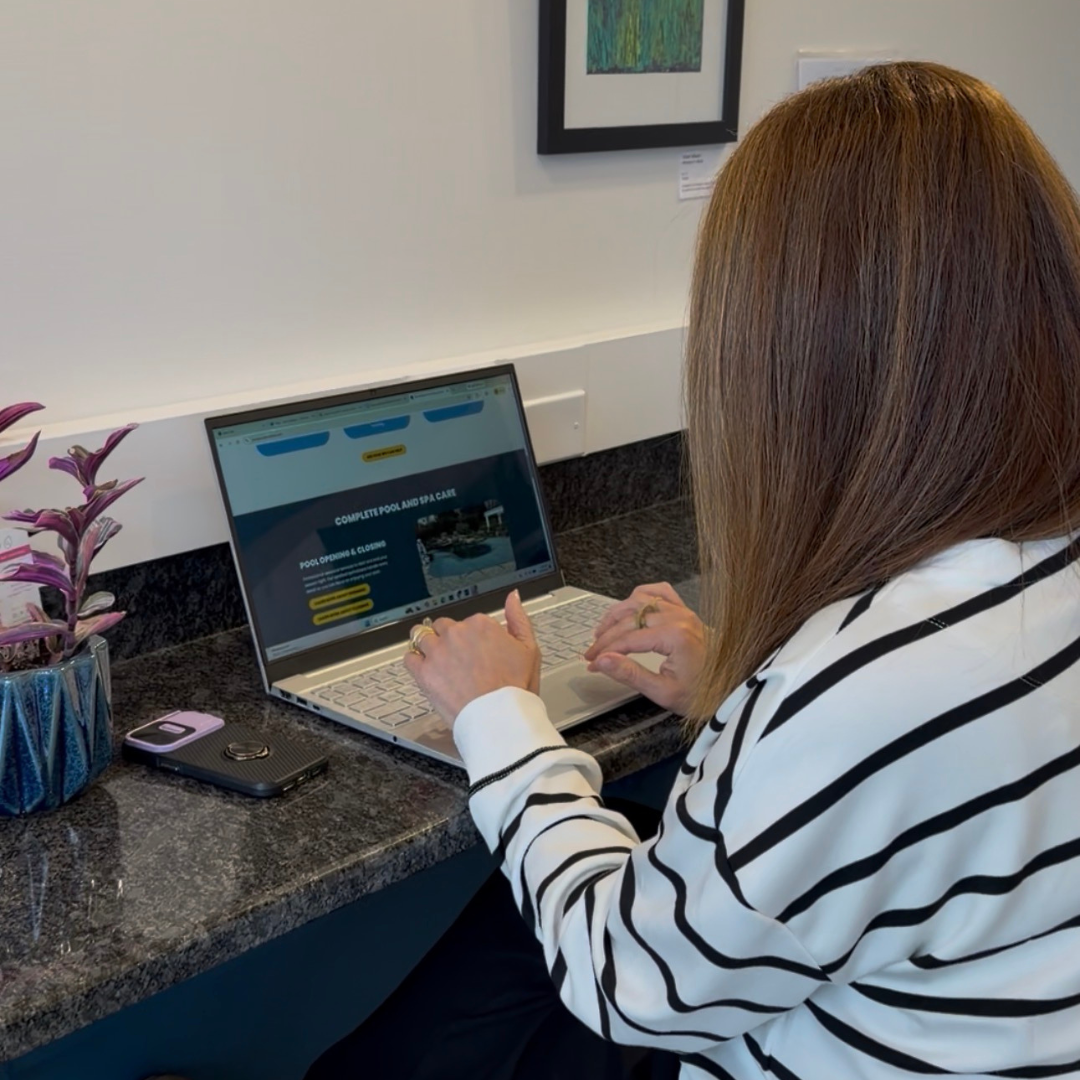
For many small business owners today, social media feels like the center of their marketing universe. Instagram posts, Facebook updates, LinkedIn articles—it can seem like that’s where all the action happens.
But according to website strategist and designer JennyB Designs founder Jenny B, social media should only be part of the strategy – not the whole plan.
I recently sat down with Jenny to talk about why websites still matter, what mistakes small businesses often make online, and how the right website can actually help turn visitors into customers.
If you run a business – whether locally North of Boston or anywhere else – her advice is incredibly practical.
Table of Contents
From Nonprofit Marketing to Website Strategy
Jenny’s journey into website design started long before launching her own business.
In the early 2000s, she was working in the nonprofit world doing marketing and development. Anyone who has worked in nonprofit organizations knows that roles often expand beyond a single job description.
As Jenny puts it:
“When you work in a nonprofit, you wear all the hats.”
One of those hats happened to be website management. At the time, blogs and platforms like WordPress were just beginning to gain traction. Jenny jumped in early – building websites and organizing information online so people could better connect with the organization.
Other nonprofits began to notice.
Soon she was helping multiple organizations with their websites. Eventually, she realized the work she loved most was designing websites that helped organizations communicate clearly and connect with their audience.
When her son was born, Jenny made the leap to working from home and officially launched her business in 2015.
Today, her company focuses on strategic website design for small businesses and entrepreneurs who want a website that actually supports their growth.
Learn more about her work here:
https://jennyb-designs.com/
Why Websites Still Matter (Even in the Age of Social Media)
It’s easy to assume social media is the most important digital tool for a business today.
Jenny sees it differently.
She explains that social media platforms often act like billboards—they grab attention, but they aren’t where the real relationship happens.
Your website is the destination.
On social media, algorithms decide who sees your content. Posts come and go quickly. Conversations happen briefly and then disappear down the feed.
Your website, on the other hand:
-
Works 24 hours a day
-
Provides clear information about your services
-
Allows customers to take action
-
Is something you actually own
As Jenny explains:
“Your website is the only platform you truly own. Social media is borrowed space.”
When a potential client finds you online, the goal should almost always be to guide them to your website—where they can learn more about you and take the next step.
“Your website is the only platform you truly own.”
JennyB
The Biggest Website Mistake Small Businesses Make
One of the most common mistakes Jenny sees is surprisingly simple.
Many businesses create a website because they feel like they should have one – but they never define its purpose.
Without a clear goal, a website becomes little more than a digital brochure.
Jenny recommends asking one important question:
What do you want visitors to do when they arrive?
Possible goals might include:
-
Booking a consultation
-
Filling out a contact form
-
Purchasing a product
-
Joining an email list
-
Scheduling an appointment
Once that goal is clear, every part of the website—from navigation to page layout—should guide visitors toward that action.
A well-designed website is not just attractive. It’s strategic.
The One Section of Your Website That Matters Most
According to Jenny, one part of your website matters more than almost anything else:
The hero section of your homepage.
This is the very first area visitors see before they scroll.
In those few seconds, they decide whether to stay or leave.
In fact, research shows that nearly half of visitors leave a website without scrolling further if the message is unclear.
A strong hero section should include:
-
A clear image
-
A compelling headline
-
A supporting sub headline
-
A call-to-action button
Visitors should immediately understand:
-
Who you are
-
What you do
-
How you help
-
What they should do next
If your homepage doesn’t communicate those things quickly, you may be losing potential customers before they even explore your site.
Why Personality Matters in Website Design
In today’s world of AI – generated content and cookie-cutter templates, Jenny believes personality is one of the most powerful ways businesses can stand out.
Your website should reflect your brand – not just in colors and fonts, but in the tone of your message and the images you use.
That might mean including:
-
Photos of you or your team
-
Images of your workspace or showroom
-
Personal stories
-
Language that reflects your voice
These details create something extremely important: an emotional connection.
And emotional connections are often what turn visitors into customers.
For local businesses in particular, this can be a major advantage when competing with larger companies.
The Balance Between Personality and SEO
Of course, websites also need to be discoverable online.
That means balancing personality with search engine optimization (SEO).
Jenny describes it as an art form.
Your website content should include relevant keywords so it can appear in Google searches – but it should still feel human and authentic.
Too much focus on keywords can make writing feel robotic.
Too little focus on SEO can make your website hard to find.
The goal is to combine the two: clear messaging that both people and search engines understand.
Jenny’s Efficient Website Design Process
Another thing Jenny’s clients appreciate is the structure of her design process.
Website projects can sometimes drag on for months.
Jenny prefers a more focused timeline.
Her typical process looks like this:
Week 1–2: Strategy and content preparation
Week 3: Homepage design and feedback
Week 4: Full website build
Week 5: Final edits and launch
In about four weeks of active build time, clients can go from concept to a fully launched website.
The key is organization and clear communication.
By keeping projects structured and efficient, clients stay energized – and businesses can start benefiting from their new website sooner.
A Resource for Business Owners: Website Design Made Simple
In addition to designing websites, Jenny also shares advice for entrepreneurs through her podcast.
🎙️ Website Design Made Simple
The show focuses on practical ways small business owners can improve their websites and increase revenue online.
Episodes include topics like:
-
Website strategy tips
-
Conversion improvements
-
SEO basics
-
Website audits
Jenny even offers mini website audits on the podcast, where she reviews a listener’s site and shares actionable improvements.
You can listen to the podcast here:
https://jennyb-designs.com/website-design-podcast/
Final Thoughts
If there’s one takeaway from my conversation with Jenny, it’s this:
Your website should be more than just a place where people land – it should be a tool that actively supports your business.
A strong website:
-
Clearly explains what you do
-
Builds trust and personality
-
Guides visitors toward action
-
Works for you around the clock
And in a digital world that continues to evolve, having a website you truly own may be more important than ever.
Learn more about JennyB Designs:
https://jennyb-designs.com/
Listen to her podcast:
https://jennyb-designs.com/website-design-podcast/
Frequently Asked Questions About Small Business Websites
Do small businesses really need a website?
Yes. Even in a world dominated by social media, a website remains the most important digital asset a business can own. Social media platforms change constantly, and you don’t control who sees your posts. Your website, however, is a platform you own and control. It provides a central place where customers can learn about your services, explore your brand, and take the next step – whether that’s booking a consultation, purchasing a product, or contacting you directly.
What should a small business website include?
A well-designed small business website should include a few essential elements that help visitors quickly understand your business and take action. These typically include:
-
A clear homepage with a strong headline
-
A simple explanation of what you do and who you help
-
A clear call to action (such as booking a consultation or contacting you)
-
An about page that tells your story
-
Service or product pages
-
Contact information and an easy way to reach you
Strong visuals and authentic messaging also help build trust with potential customers.
Why do visitors leave a website so quickly?
Many website visitors leave within seconds if they don’t immediately understand what the business offers. This is why the top section of a homepage – often called the hero section – is so important. It should clearly communicate who you are, what you do, and how you help people. If visitors feel confused or overwhelmed by too much information, they are likely to leave and look elsewhere.
How can a website help a small business compete with larger companies?
One of the biggest advantages small businesses have is personality and authenticity. A thoughtful website design can highlight the people behind the business, the story of the brand, and the unique experience customers receive. Including real photos, clear messaging, and a strong brand voice can help small businesses build trust and create a connection that larger companies sometimes struggle to achieve.
How often should a small business update its website?
While a website doesn’t need constant redesigns, it should be reviewed and updated regularly. Small updates—such as adding new photos, improving page content, or refining messaging – can keep the site fresh and relevant. Businesses should also ensure their website continues to reflect their current services, branding, and goals.
Where can business owners learn more about improving their website?
Website strategist Jenny B shares tips and practical advice for entrepreneurs through her podcast, Website Design Made Simple. The show covers ways small business owners can improve their websites, attract more visitors, and turn website traffic into real customers.
You can explore more resources here:
JennyB Designs website
https://jennyb-designs.com/
Website Design Made Simple podcast
https://jennyb-designs.com/website-design-podcast/
Recent Posts
Finished Basement vs. Unfinished: What Actually Adds Value North of Boston
If you own a home in Woburn, Reading, Burlington, Wakefield, Stoneham, Winchester, or another community north of Boston, you have probably wondered whether finishing your

Handyman Services North of Boston | Done 4 You Handyman
Handyman Services North of Boston: Meet Done 4 You Handyman Every homeowner has that list. The door that sticks. The drywall that needs to be

The Canine Coiffure Wakefield MA | One-on-One Dog Grooming
The Canine Coiffure in Wakefield, MA: One-on-One Dog Grooming with a Personal Touch When you leave your dog with a groomer, you are trusting someone

Living in Wakefield, MA: Local Guide for Residents & Home Buyers
Living in Wakefield, MA: A Local Realtor’s Guide to the Town on the Lake You come around the bend on North Avenue, the lake opens

Things to Do North of Boston (August 21st–August 27th, 2026)
Things to Do North of Boston (August 21st-August 27th, 2026 Looking for things to do in the Greater Boston area this week? Here’s your curated
Brissonté Gifts & Home Decor | North Reading Gift Shop
Brissonté Gifts & Home Decor: A Favorite Local Gift Shop in North Reading, MA If you’re looking for a unique gift shop in North Reading,